
A platform, not a report
Why Pythia collects data first, structures it next and only then calculates.
“Could you quickly show me how returns in our own shop have developed compared with the marketplace?” In many companies the answer to that question takes two days. Not because the data is missing – it all sits in the ERP. But because every new question needs a new report that somebody first has to build.
Pythia was meant to turn that around: the work goes into storing the data once, and after that every question is just a filter.
Collect first, structure next, then calculate
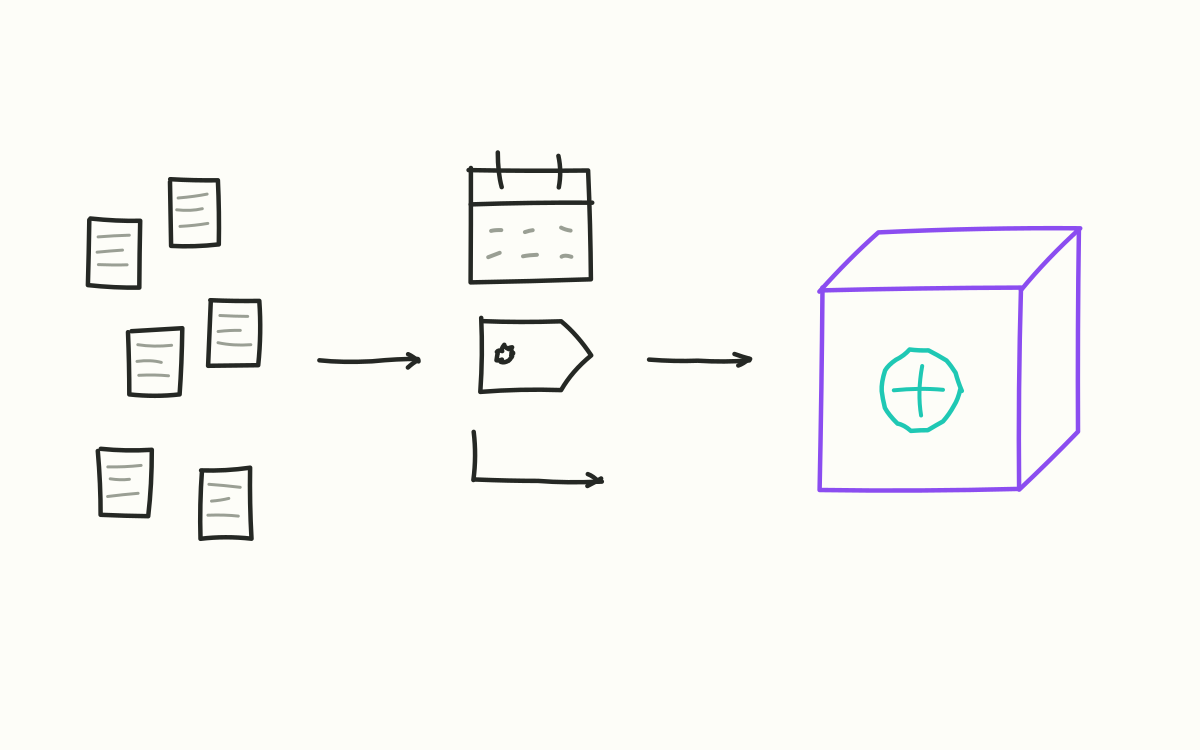
The rebuild followed an old, proven pattern from data warehousing. Data passes through three layers:
- Staging: everything arrives exactly as delivered – all 76 columns, unchanged, as text. Nothing is interpreted on import, so nothing is lost on import either.
- Dimensions: the stable axes people ask along – time, item, product group, channel, warehouse, country, payment method, receipt type.
- Facts: the actual figures, properly typed and linked to the dimensions. Sales, credit notes, purchasing and stock movements sit in separate tables.
That sounds technical, but it has a very practical consequence: every figure can be sliced along the same axes. Whether revenue, units or returns – the same filter on channel or product group works the same everywhere.
Taking receipt types seriously
The most important step looked minor: Pythia now distinguishes what a receipt actually is. Invoice, credit note, sales order, stock movement, goods-received invoice, purchase order, supplier document. Each type has its own meaning and ends up in the matching fact table.
Only then do questions become possible that couldn’t even be asked before: how does purchasing relate to sell-through? How do credit notes develop alongside sales?
A product group is not a business
One decision from this period still shapes Pythia today. The product groups in the ERP have grown over the years. Some historical catch-all groups contain completely different product worlds. Report by those groups and you compare apples with garden furniture.
The ERP product group is an accounting axis. Decisions need a business grouping.
That business grouping came later as a layer of its own. The platform was prepared for it from the start.
Open to more
Because the core only knows staging, dimensions and facts, new sources can be connected without rebuilding it: item master data, weather, economic indicators, events. Each new source becomes further dimensions or facts – and can immediately be combined with everything else.
Next month: the 88 percent – what happens when a check makes the same mistake as the thing it is meant to check.