
Ready for operations
Roles, two-factor login, an admin area – and a data build that runs three times faster.
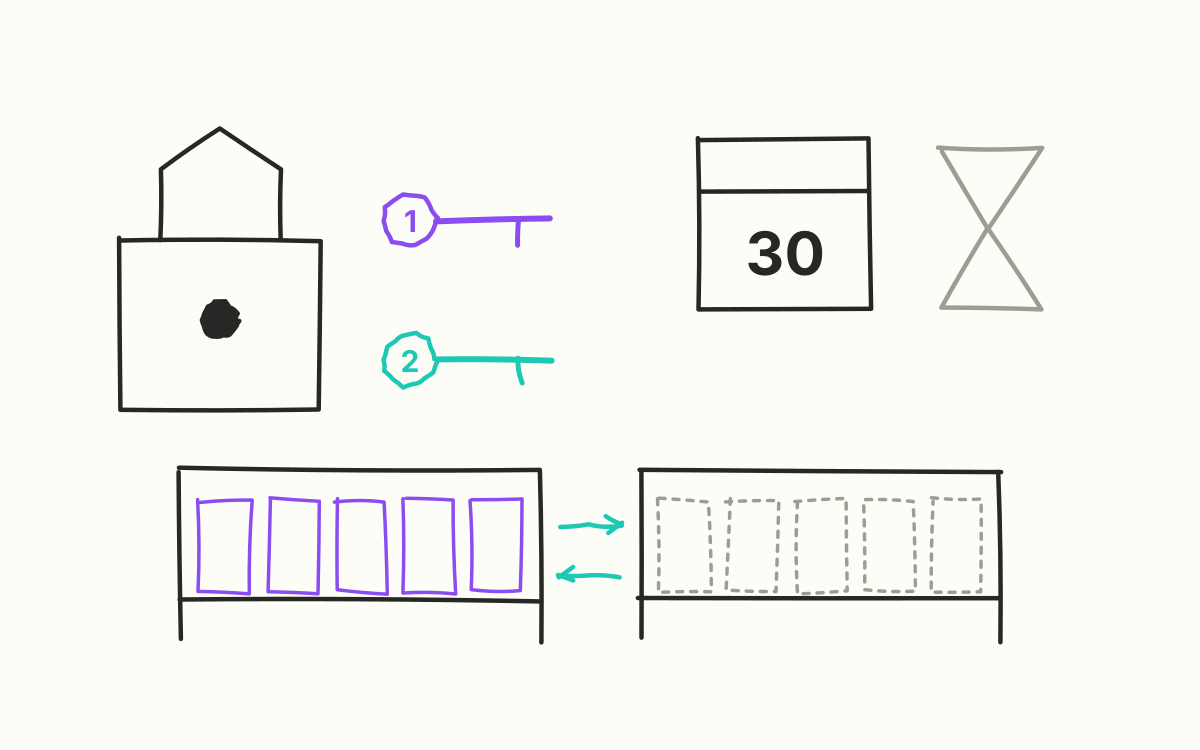
An analytics tool for two people is a project. An analytics tool for a whole department is an operation. Then other questions matter: who may do what? What happens if someone gives away their password? And what does everybody see at eight in the morning if an import got stuck overnight?
This month Pythia became ready for operations.
Sign-in that means it
Sign-in is always on. There are two roles, administrator and user. New users get a starting password that is shown exactly once and must change it on first sign-in.
A second factor is mandatory, not optional: an authenticator app set up via QR code, plus ten one-time recovery codes in case the phone gets lost. After five failed attempts in 15 minutes the account is locked. An unknown name and a wrong password get the same response, so nobody can probe which accounts exist.
Every user sees their signed-in sessions with device and time and can end individual ones. For the very first start there is an emergency access from the server configuration – time-limited, loudly logged and with a red banner, so nobody uses it as a permanent solution.
The admin area
Much of what used to need a developer with database access is now done by an administrator in the browser: starting special runs such as rebuilding the figures, importing the range assignment or calibrating the shopping-weather index, following their status, and repairing the intake when a delivery is stuck. Only one special run happens at a time.
When the licence is about to expire, Pythia shows a slim countdown bar 30 days ahead; after that the data views are locked while background runs continue.
Faster, without anyone waiting
Until now the figures were thrown away completely and rebuilt with every new delivery. During that time reports were slow or individual queries broke off. Now Pythia rebuilds only the part that has changed and swaps it in in a single step at the last moment.
The full build is around three times as fast as before. Catching up a single annual file about fifteen times as fast. And reports stay available throughout.
If the check reports an inconsistency after a run, the next run automatically becomes a full build. Pythia heals itself instead of waiting for someone to notice the error.
Next month: P-DisΔ – where the return rate really deviates, and what comes next.